
Product
Starfall Academy — Issue #1: First Light
Our original comic: a school inside a fallen star, and the light waking up.
Category
Original comics, previews and craft notes. Everything listed here is original Pagelyra work — products, previews and articles from our own studio.
Starfall Academy is an original comic in every sense that matters: its world, its four students, its fallen-star school and its light-waking-up mystery were invented in this studio, and Issue #1 is a complete 32-page story — plotted backwards from its final page, with a beginning, a middle and an ending that opens a door rather than cutting the floor away. We publish issues, not fragments: when you finish Issue #1, you have read a whole story, and the back-matter shows you the palette guide and the plotting beats it was built from.
Our comics are for readers who want a story they can finish tonight: newcomers curious about comics but wary of sixty years of continuity, phone readers who prefer scrolling to page-flipping, and longtime comic readers who enjoy watching a world start from issue one. Issue #1 is an all-ages adventure — mystery and wonder, no graphic content — so it also suits younger readers finding their first series. If you have ever bounced off a superhero universe for arriving decades late, Starfall Academy was made for you: everyone starts at the same first page.
Every issue comes in two editions. The page edition is the classic comic layout as a PDF, made for tablets and larger screens. The vertical-scroll edition rebuilds the same panels into a continuous phone-friendly strip — the format you can sample right now in our free Comic Reader, which presents the opening sequence's five panels with their original narration, dialogue and visual direction. Whichever edition you choose, the story is identical; only the turning — or scrolling — changes. Try the reader preview first and let your thumbs decide.
Before you buy a page, you can meet Juno, Tam, Priya and Wex on the Issue #1 product page, where each character card explains their palette, their habits and their one careful secret. Issue #1 lets you catch exactly one clue about Wex. The character cards are spoiler-light by design — they tell you who to watch, never what happens.
Most comics hide how they were made. Ours shows its working. The blog carries the five storytelling tricks behind Issue #1 — silent openers, one palette per character, cliffhanger maths, panel rhythm, and dialogue tested by reading it aloud — explained with the actual pages as evidence. The issue's own back-matter includes the palette guide and the four plotting beats the story was built backwards from. Whether you are a reader who likes knowing how the trick is done, or a maker building a first issue of your own, the notes are free and they are honest.
The first three panels of Issue #1 carry no words at all: the night the star fell, told in pictures alone. When you open the free reader preview, read those panels slowly. Nothing in them is decoration — the palette is the cold set the book reserves for the past, and the third panel is composed so that the first spoken line of the issue lands like a sound in a quiet room. That is the silent-opener trick from our craft notes, working exactly as designed.
It is also a fair test of the whole comic. If three wordless panels can hold you, the issue's method — story first, exposition last, every page earning its turn — will hold you for thirty-two pages. If they cannot, the preview has done its job honestly, and it has cost you nothing but a scroll.
Our original comic: a school inside a fallen star, and the light waking up.
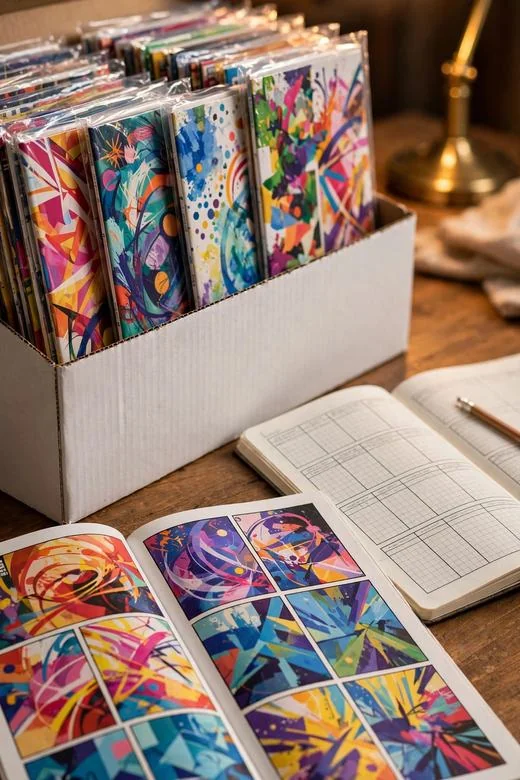
The printable log built for comics: issue logs with full creator credits, arc spreads, art notes, creator trackers and a pull list. Free 3-page sample.
The free vertical-scroll opening sequence of Issue #1.
Silent openers, palette rules, cliffhanger maths and dialogue read aloud.
Yes. Issue #1 is an all-ages adventure built on mystery and wonder, with no graphic content. It was written to be a safe first comic and a satisfying one for adults.
No. Issue #1 is the start of the story and stands on its own. There is no Issue #0 to hunt down and no other series to catch up on — this page is the beginning.
Yes. The vertical-scroll edition is built for phones, and the free Comic Reader preview on this site shows the exact format — open it and scroll the opening sequence.
Every product in this category has a real free sample in the Free Library.
Open the Free Library