
Comics
5 Comic Storytelling Tricks in Starfall Academy
Starfall Academy Issue #1, from the inside: silent openers, limited palettes per character, cliffhanger maths, panel rhythm, and dialogue read aloud.
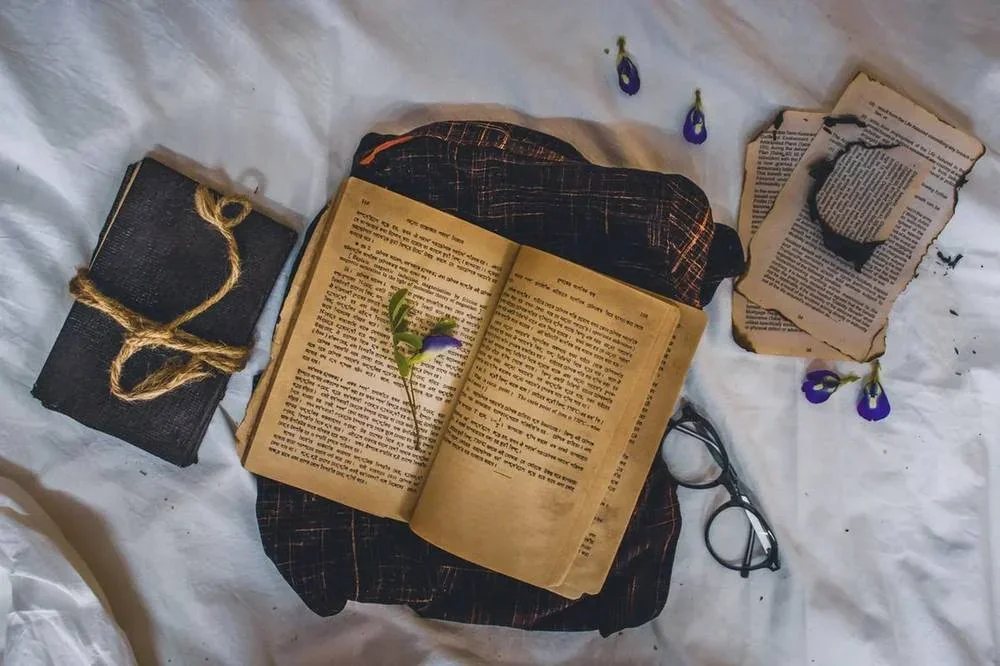
Halloween night has a shape: dark early, a doorbell that may or may not ring, and a few hours that belong to nobody. It is the best night of the year for a short book — a mystery or a dark little fantasy you can start after dinner and finish before the candle does. This guide is about choosing one well, and then making a proper night of it.
A long novel spreads its dread across weeks, and dread diluted is just atmosphere. A short read concentrates it. The story starts, the wrong note sounds, and the resolution arrives while you are still sitting in the same pool of lamplight — the fear never gets interrupted by a workday, a commute, or a chapter you skim because you were tired. There is a practical mercy in it, too: Halloween falls on a school night for somebody every year, and a book that ends by midnight respects the reader's actual life.
Short also means finishable, and finishable means the whole arc lands at once. The clue planted on page nine pays off on page ninety in the same sitting, while you still remember the exact sentence it hid in. Mysteries especially gain from this. The fair-play contract between writer and reader — every clue shown, nothing withheld — works best when the evidence never leaves your short-term memory. One night, one book, every clue still warm.
Price the evening in pages, honestly. Most adults read somewhere around a page a minute in fiction, a little slower when they are savouring, so a novella of ninety to a hundred and thirty pages asks for about two unhurried hours — the length of a film, with better pictures. A short story collection cheats even more kindly: each story is a complete dose, and you can stop after any one of them feeling finished rather than interrupted. A single comic issue is the fastest door of all — one sitting of panels, and the night still has room for a second read.
Judge by the unit, not the stack. One complete novella beats three abandoned chapters of a doorstop, and a genuine 'short read' should close its own door behind it. Be suspicious of the slim volume that is secretly book one of nine, with the ending held hostage by the sequels. Everything we publish at Pagelyra is built to the closing-door rule, but the rule serves you in any bookshop: check that the story ends inside the covers you are actually holding.
The mysteries that work in a single sitting share a skeleton. One setting that matters — a house, a train, a village, a ship — because a small map lets the writer plant fair clues and lets you patrol them. A small cast, each person with one legible want. And one burning question, stated early, that the whole book leans towards: who, or how, or — in the best ones — why on earth.
Watch for the fair-clue tell. A one-night mystery is honest when the solution was visible before it was obvious: the object described twice, the timetable mentioned once too casually, the door everyone keeps walking past. When the reveal comes and you flip back three pages to find the clue grinning up at you, that is the form working exactly as promised. If the solution needs a character you met in the final chapter, put the book down and pick a fairer one. Halloween is too short for cheaters.
Mystery gives you the pleasure of a lock clicking open; dark fantasy gives you the pleasure of a door that should not exist. Choose by the feeling you want at midnight. Mystery sends you to bed satisfied and slightly smug, the world tidily re-ordered. Dark fantasy sends you to bed with one image still glowing — a gate standing in a garden where no gate was yesterday, a window lit in an empty house — and the world very slightly larger and stranger than it was at dinner.
Our own shelf leans to the second kind. The Clockwork Garden, our original fantasy novella, opens on the first morning of October with a gate that grew in the night and brass leaves counting down in the wrong order — and its complete first chapter is free to read on the product page, which makes it the cheapest Halloween decision you will make all month. For a lighter chill, our original comics open with a star falling and a school bell ringing by itself at the edge of an empty crater; the free reader preview takes one short sitting, start to finish.
Treat it like a tiny festival with a running order. Early evening, while the light fails: the short, bright read — a comic issue or a single story. Prime time: the main book, lights low, phone in another room, and a drink with a season in it. Last of all: one very short piece to close the night, the literary equivalent of checking the locks. Write the plan down and it becomes a tradition — and a tradition is only a plan that survived one October.
Reading with others? Give everyone the same short book a week ahead — short is precisely what makes a whole club actually finish — and talk it over for one hour with good questions. A one-night book plus a one-hour conversation is the entire Halloween book-club formula. And if you are quietly building a bigger year of reading, an October spooky title does honest double duty towards the 2027 Reading Challenge: bank it in the season when reading feels like a treat instead of a duty.
Every Halloween of her life, someone had left a pumpkin on Mrs. Abernathy's step, and every Halloween she had pretended not to care who. She was eighty this year, and the street had changed around her — the children grown, the maples gone, new neighbours behind lit windows she did not know. At dusk she opened the door with a speech prepared, ready to catch them at last. The step was empty. Her heart did something unwise. She stood in the cold doorway a whole minute, scolding herself: to grieve a pumpkin is a small thing, and she had been saving her grief for large ones.
Then, from the dark end of the street, came the new neighbours' little girl, six years old and solemn as a judge, carrying a pumpkin nearly bigger than herself. 'Mum says you always have one,' she announced, setting it down with both hands. 'Mum says the lady who lived in our house left it, every year, before we came. So now it's me.' Neither of them mentioned that the house had stood empty for two years before the family came. Behind the girl, up and down the street, pumpkins stood lit that had not been lit an hour before.
Because a tradition, Mrs. Abernathy understood at last, is not a thing one person does. It is a thing handed over, in the dark, to whoever is still small enough to believe it matters. She fetched the matches from the kitchen, and the two of them lit hers together — and the candle, once lit, burned very steady all evening, as if someone kind were standing close, keeping the wind off. — An original micro-story from the Pagelyra studio, written for this guide.
However the night goes, give it ninety seconds afterwards. Log the book, write the four-line review — what it promised, what it delivered, the moment it chilled you, and who you would hand it to next October — and note the running order that worked, so next year's Halloween starts from a tradition instead of a scramble. The monthly log and review pages in the Ultimate Reading Journal Bundle exist for exactly these small, seasonal entries, and the free sample in the Free Library will cover this year's page on its own. Short book, short night, long memory: that is the whole formula.
Short reads are the season's appetiser; some October readers want a full case to solve. Ours is The Saltmarsh Inheritance — a fair-play cozy mystery novella set in the coastal town of Ternmouth: a contested will, a vanished brass tide-key, and fourteen clues planted before any of them pays off. Its complete first chapter is free on the product page, so you can open the case tonight and decide whether to see it through.
A novella of ninety to a hundred and thirty pages asks for about two unhurried hours, based on the guide's estimate that most adults read somewhere around a page a minute in fiction. A short story collection or a single comic issue can be finished in even less time.
A shared skeleton: one setting that matters, a small cast where each person has one legible want, and one burning question, stated early, that the whole book leans towards.
The solution was visible before it was obvious — the object described twice, the timetable mentioned once too casually, the door everyone keeps walking past. If the solution needs a character you met in the final chapter, the guide says to put the book down and pick a fairer one.
Choose by the feeling you want at midnight. Mystery sends you to bed satisfied, with the world tidily re-ordered. Dark fantasy sends you to bed with one image still glowing, and the world very slightly larger and stranger than it was at dinner.
A gate that grew in the night, brass leaves counting down in the wrong order, and a complete story in 37 pages. Chapter One is free on the product page — start it tonight.
The Clockwork Garden — original fantasy novella, Chapter 1 freeChapter One of The Clockwork Garden — 'The Gate That Grew Overnight' — is free in full on its product page and as a PDF in the Free Library. Read it tonight; the gate is already there.
Open the Free Library Visit the ShopStarfall Academy Issue #1, from the inside: silent openers, limited palettes per character, cliffhanger maths, panel rhythm, and dialogue read aloud.
Our creator persona A. R. Calloway on journals that respect your time, novellas with real endings, and comics plotted backwards from the final page.

Book club discussion questions, printable and grouped for real meetings: 40 questions that work for any book — openers, character, theme, plot and closers — plus a facilitator's playbook.